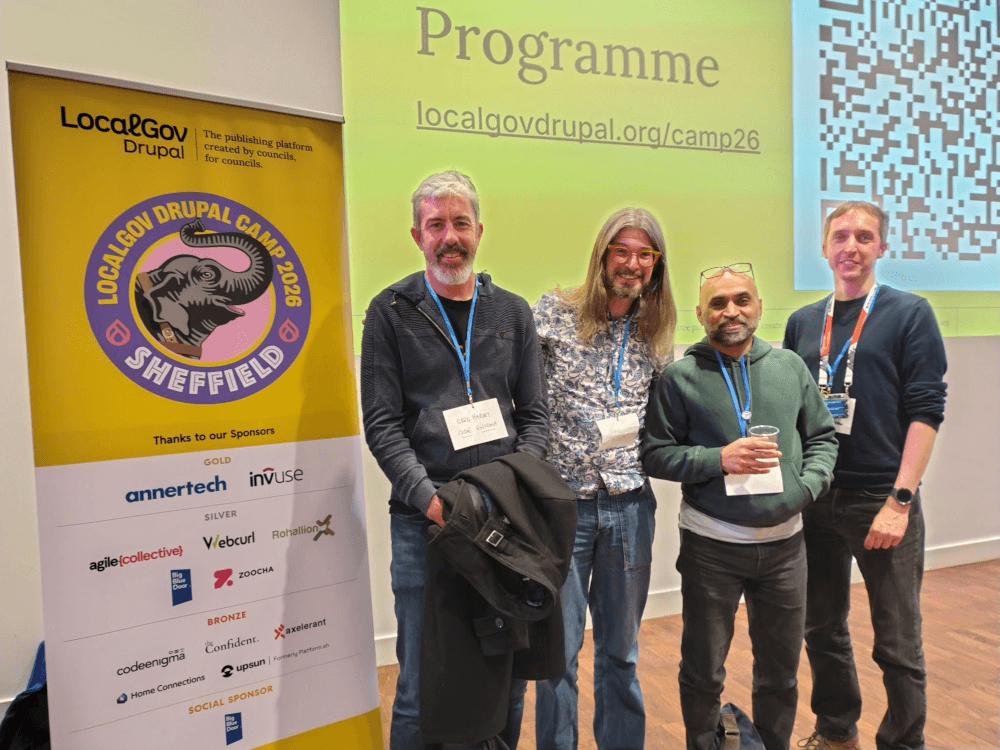
LocalGov Drupal Camp 2026 was held on 11th and 12th June in the city of Sheffield in the north of England. I drove over the Pennines from my home in Cheshire to attend the camp for the two days.
LocalGov Drupal, in case you weren't aware, is a Drupal distribution that is set up in a way that makes it easy for councils to publish their content. Since it's built on Drupal the sites can also make use of the many Drupal modules available. There are also lots of additional LocalGov Drupal modules that integrate with waste collection systems, bus timetables, election results, and many more.
Last year, LocalGov Drupal was being used by 57 council websites across the UK. This year, that figure has jumped to 73! A fantastic achievement, with that number only set to get bigger.
The camp itself consisted of a Wednesday night social night, a day of talks and other sessions, followed by a day of workshops and sprints.

Wednesday Night
The social on Wednesday night was held at the National Videogame Museum in Sheffield city centre. On entry we got a couple of free drinks, and there was plenty of pizza to go around (perhaps too much pizza!).
This was amazing venue to have a social! After spending a while catching up and chatting with lots people we went into the museum itself and played some games for a while. 4 player Pacman and Ultimate Chicken Horse were particular favourites from the evening.
I will certainly be heading back there to spend more time looking at the exhibits. I had a quick look whilst I was there, but there was plenty of things to look at and games to play. I can recommend taking a friend as there are a few two player experiences to get involved with.
Day 1
The first day of the conference was a day of talks and sessions in the Sheffield Hallam University, City Campus building. We had a meet and greet in the main Howard Pennine Theatre in the morning, where we had a chance to chat before starting the day.
The first talk of the day was Governing AI search within LGD: a practical guide for council web teams by Fintan Galvin from Invuse. This was an overview of using AI to power search systems for websites. It was not a technical overview of how to run the system but instead an overview of what to look out for when running a system like this. An AI powered search system is where users can enter normal text and get answers from the content on the site.
Most notably, even if you create a system like this for your Drupal site then you must ensure that you monitor and govern the system as much as you can. Many AI models and the content they are trained with will have biases, and Fintan demonstrated how difficult it was to confirm what sort of bias the search has. By monitoring the searches being made (and the results produced by the AI agent) you can at least try to ensure that the biases are recorded and work done to correct them.
My main take away from the talk was that AI search on public websites isn't ready yet. Fintan said it would be between 1-2 years before we can rely on the system to produce accurate, non-biased results. Hallucinations of results that don't exist are a big problem and this isn't something that anyone has been able to solve.
Personally, I think we are never going to be able to get there with the current LLM technologies, at least certainly not with the budgets available to the average council.
Next up was a look at the LocalGov Bus Data module with Shazia Attia from Cumberland Council and Mark Conroy from The Confident. I have looked a little at the bus module as part of my work building council websites, but it was interesting to see a deeper dive into what problem the module is solving, how to use the module, and what is coming in future versions. All bus companies are legally required to upload their timetables to a central government resource, and this module allows you to pull data from that resource and present it to users in the form of a bus timetable search system. As the data you can pull from this resource can encompass multiple parts of the UK, it is possible to upload some geographical information to the module (in a couple of different ways) to just search within a particular council boundary. It's a great module and works really well. The mapping feature is particularly good to see and a real selling point of the system.
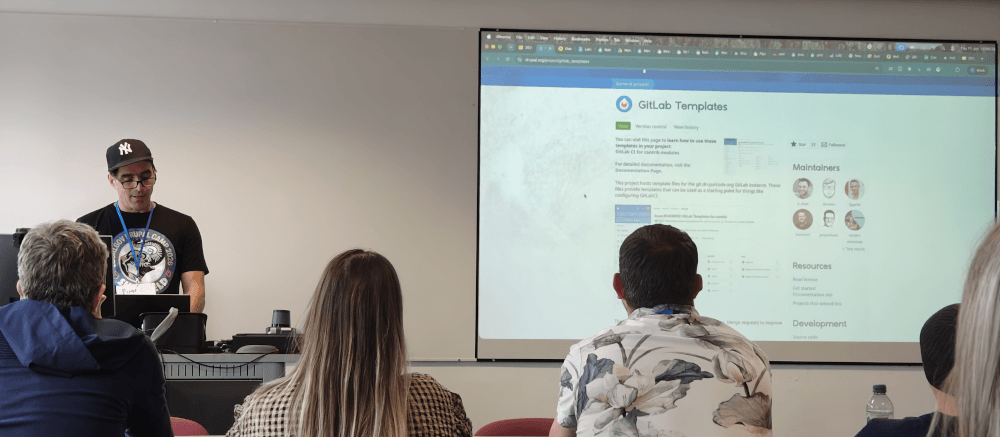
After lunch I went to see Finn Lewis and his talk Testing your mettle: an introduction to testing on drupal.org. Since all of the LocalGov Drupal projects have now moved to Drupal.org the community has spent a lot of time making sure that all of the tests available on Drupal.org GitLab are working. The talk looked at how to set up a project on Drupal.org with tests, what sorts of tests are available, and what sort of tools are used to run these tests. Finn picked a LocalGov Drupal project and added tests to the project live in the session, which was very impressive. I've been using tests on Drupal.org GitLab and DDEV for a few years now, and Finn's talk taught me a few few things about running tests in parallel and looking at Drupal functional browser tests using a browser. Really good that I learned something new from a tool I use every day. Thanks Finn!
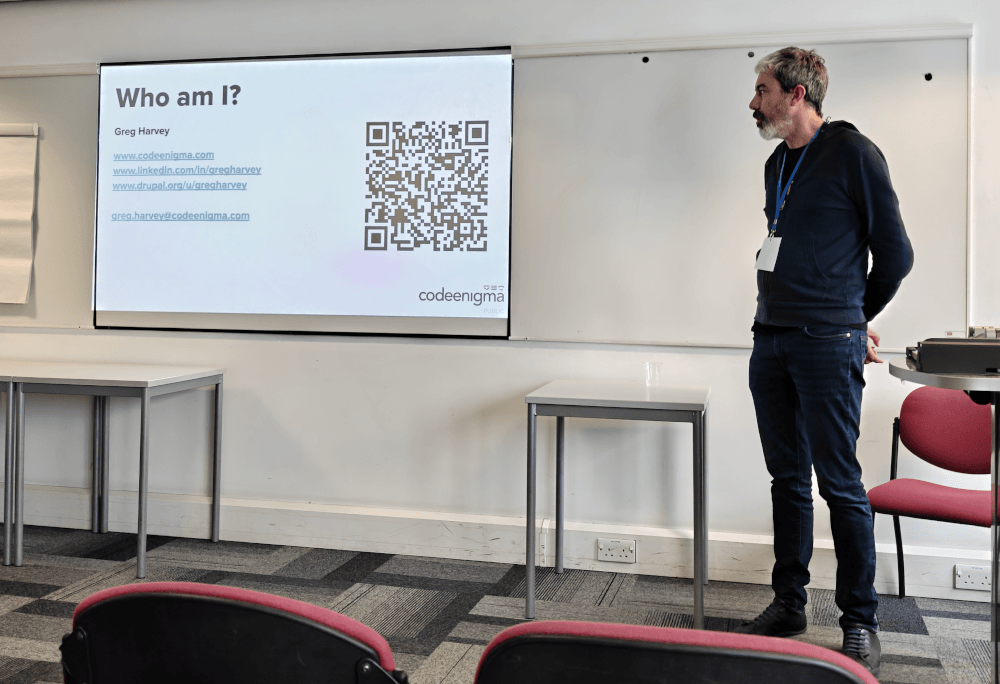
The final talk of the day was Take control of your LLMs, with Greg Harvey from Code Enigma (my boss). This was a look into how to use tools like LiteLLM, opencode and Open WebUI to take back control of your LLMs. Rather than integrating your services directly with Gemini or ChatGPT, you can instead use systems like LiteLLM to create a bridge between your services and those AI services. What this means is that if you want to swap the AI service out, or try a different service you can configure LiteLLM to do that, without disrupting your internal services. This also means that you can look at using AI model hosts or even hosting you own AI models to break away from these big firms that can change their systems or increase their pricing without warning.
What I didn't realise was that most of the bigger AI companies use minimum wage (usually overseas) labour to categorise data in their models. These people will often work for pennies a day and if the work isn't deemed "good enough" they won't get paid anything at all. Pretty disgusting really.
Thankfully, some open source models are being worked on and are getting better every few weeks. These range from "open weights" where the training weights are published, to fully open source, where even the training data is made available.
Greg's slides are available if you want to take a look at them. We also record the session, and that's now available to watch on YouTube.
After Greg's talk we all went back to the main hall for a wrap up session, followed by a social evening and chat about what we had learned throughout the day.
Later that evening we headed to a sushi restaurant to get some food; before heading to a pub to chat the evening away.
Day 2
The second day consisted of two rooms in Sheffield Hallam University where people worked on a number of different things to contribute back to the LocalGov Drupal project. This included creating logos for the LocalGov Drupal modules for the project browser system, adding tests to the new version of the consultations module, and looking at the LGR changes and what they will mean for the community. All of that was happening on just my table, so there was a lot of activity during the day.
I sat down a worked on an existing issue on the LocalGov Waste Collection module that I had noticed in a recent project. I found a fix to the issue and was able write some tests to verify that the issue was fixed. Once that was done I looked at correcting some of the coding standards in the module.
There was also a table looking at getting people up and running in Drupal development, and even contributing to different modules. This followed an initiative from a few years ago called "Drupal Ladder", which was an introduction to Drupal development, so it was good to see the ladder program continuing in the LocalGov Drupal community.
This year's LocalGov Drupal Camp was excellent and I enjoyed every minute of it. It was great to meet up with the the people I know, and also to meet some of the people that I see on the weekly LocalGov Drupal meetings face to face. I even met up with a client I'm working with at the moment and chatted with him for a while.
The vibe of the camp felt really collaborative. I saw developers working on modules and non-developers feeding back their thoughts on usability and features. People from different companies and councils working together to make a product that everyone can benefit from. I know this is the goal of LocalGov Drupal, but I felt like saw it in practice a lot more this year.
The Sheffield Hallam University staff were great over the weekend. In fact, we realised that on Friday that we didn't have enough power sockets for people, so they university provided a big bunch of multi-gang extension cables so that everyone could get power. The WiFi access wasn't brilliant, but most of us were able to use our phones to get an internet connection.
Thanks very much (again!) to Tim Hunt, Aaron Hirtenstein, and all the people who helped with this years event. Also, thanks to all the people who ran sessions, they were very interesting and informative and I learned a lot. I was often spoilt for choice in picking the next talk I would go to.
If you are interested in getting involved in LocalGov Drupal then you can start by going to https://localgovdrupal.org/. There are also plenty of events you can take part in over at the LocalGov Drupal lu.ma pages.

Paul Stanton